Hand-Lettering for Brand Identity: When to Choose Custom Over a Font
Once a quarter, a founder will ask me to “do calligraphy for a logo”. Sometimes this is exactly the right call. Sometimes it will quietly damage the brand. The decision turns on a small set of variables that founders rarely think about until the bill arrives. Here is the framework I use.
What custom hand-lettering actually signals
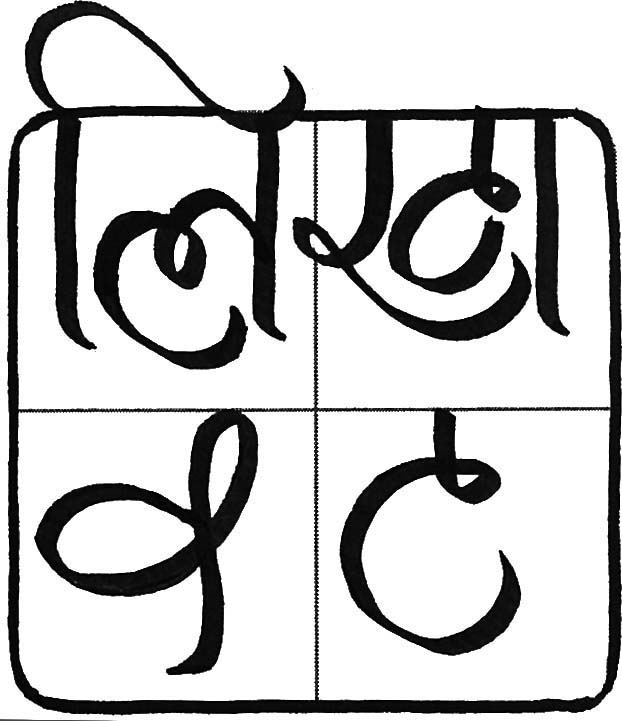
A hand-drawn wordmark whispers three things at once: premium, artisanal, and heritage. The viewer cannot always articulate why a custom mark feels more expensive than a typeset one, but the perception is immediate and reliable. The signal works because it is structurally honest: somebody actually drew this, and you can tell.
The signal is strongest when the brand operates in a category where craft is part of the value proposition. Skincare, restaurants, weddings, cultural products, books, single-origin coffee, design studios, ateliers. In these spaces, a hand-drawn mark earns its place inside two seconds.
When NOT to use it
The signal becomes friction in three situations.
- Digital UI-heavy products. A SaaS dashboard, a fintech app, a logistics platform — the user opens these tools forty times a day and needs the wordmark to read instantly at 16 px in the corner of a tab. Hand-lettering rarely scales below 32 px without losing legibility.
- Fast-moving e-commerce. Brands that change packaging every quarter, run hundreds of seasonal SKUs, or rely on third-party manufacturers will spend more time fighting their wordmark than benefiting from it. Custom lettering is hard to extend; a font is infinitely extensible.
- Brands targeting strictly utilitarian categories. Insurance, generic pharma, industrial supply. The premium signal is wasted — sometimes counter-productive — in spaces where customers are buying on price and reliability.
A hand-drawn wordmark whispers three things at once: premium, artisanal, and heritage.
A short case — the imaginary café
Imagine a small café in Bandra opening this winter. The owners want to serve single-origin South Indian filter coffee in slow ceramic cups, with a small pastry programme and one daily savoury. Their first instinct is to commission a sleek geometric sans-serif logo because that is what the design Instagrams show.
This is a clean case for hand-lettering instead. Their differentiation is craft — the brewing, the porcelain, the patience. A geometric sans will fight that positioning the moment a customer sees the cup beside the name. A hand-drawn wordmark, by contrast, will support the cup. Same hand, same care, same signal. Across the menu card, the takeaway sleeve and the front door, the lettering will keep saying what the coffee is also saying.
The investment — one custom wordmark, three or four secondary lockups, a small set of decorative flourishes — will pay for itself within the first six months in higher perceived ticket size alone.
Indian brands doing this well
Three examples from our own market that show the principle at scale:
- Forest Essentials — the hand-drawn lettering on the labels of their richer ranges (the saffron and neem soaps, in particular) does more work than the price tag could. Without it, the product would look like generic Ayurveda. With it, the price feels reasonable.
- Nicobar — the wordmark is a quiet hand-drawn flourish, never a sans-serif. It pairs effortlessly with their photography and their slightly literary product descriptions. A typeset wordmark would have flattened the entire brand into another e-commerce label.
- Kunzum — the bookshop chain in Delhi has used hand-lettered menu cards and signage from the start. The cost is real (the cards are reprinted every few weeks because they live on a counter) but the pay-off is a customer experience that travels: people Instagram the menus.
A simple decision rule
If your brand has to read at 16 px on a screen forty times a day, choose a font. If your brand is met by a customer with a pause — a packaging unwrap, a menu card lifted off a table, a signboard glanced at across a street — consider hand-lettering. The cost difference (roughly Rs 40,000-2,00,000 for a custom wordmark in the Indian market, against Rs 0 for a free Google Font) sounds large in isolation. Spread across the lifetime of a brand, it is one of the cheapest signals of intent that money can buy.
A note on extension
The single biggest mistake founders make after commissioning a custom wordmark is treating it like a mascot — pinned to the home page, untouched. The mark earns its keep when it extends: a hand-drawn ampersand, a flourished section divider on the menu, a lettered label on the packaging seal. Ask the calligrapher up front for an extended kit, not just the wordmark. Two hours of additional work at the start saves a year of inconsistent extensions later.