Why Hand Calligraphy Still Matters in a Pixel-Perfect World
A friend asked me last week why anyone would still hand-paint a wedding invitation in 2026 when a Pinterest pick and ten minutes in Canva can deliver a “calligraphy-style” PDF before the chai cools. I gave her the polite answer first — tradition, heirloom, the joy of slow craft. Then I gave her the real one: typed Sanskrit and cursive Urdu set on a screen do not breathe. They are correct. They are not alive.
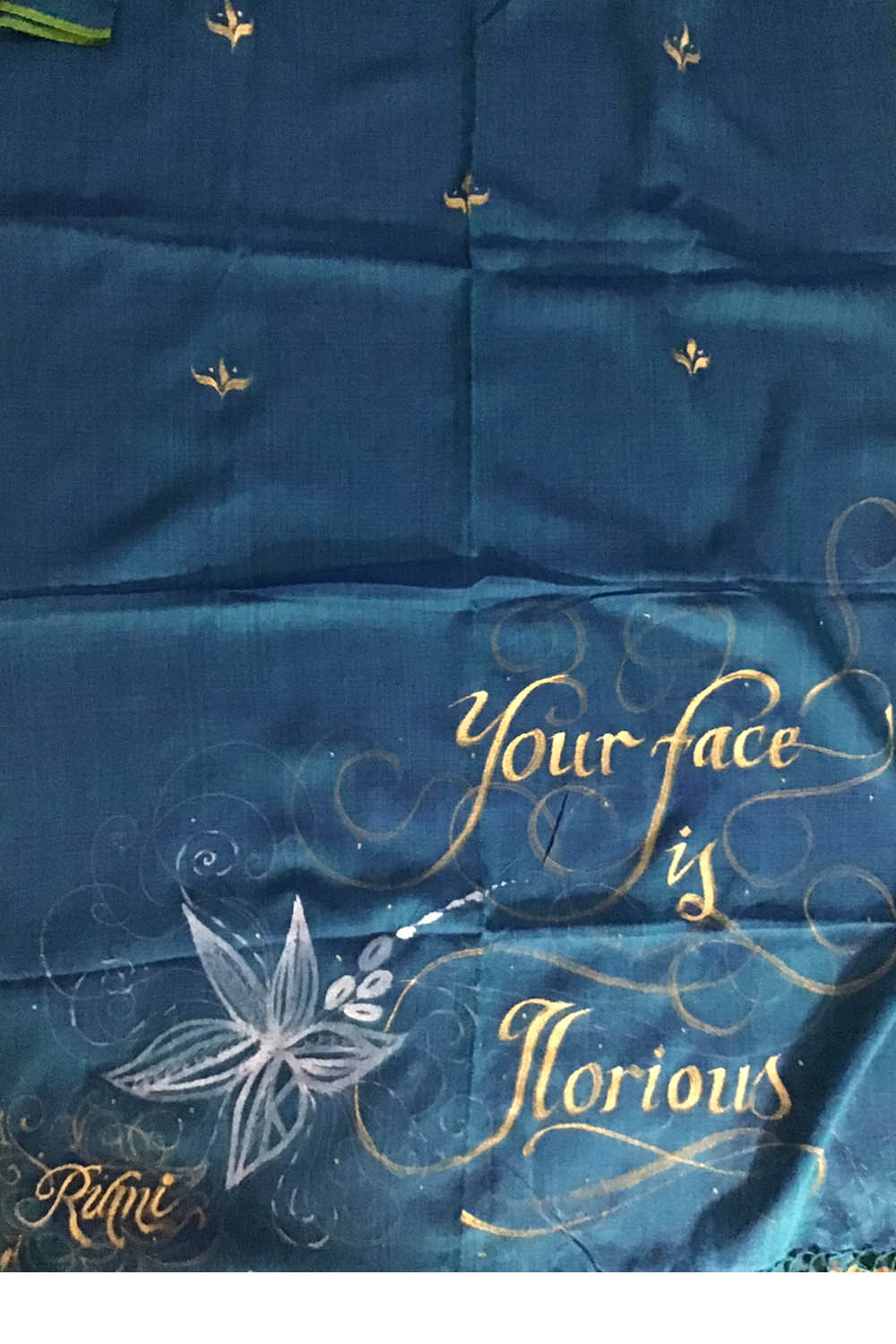
Calligraphy, in the old sense, is a record of a body in motion. The wrist tilts, the elbow drops a fraction, the breath holds for half a beat at the end of a long descender. None of that survives the leap into a font file. A digital ligature is the same in Mumbai at 4 a.m. and Madurai at noon. A hand-drawn one carries the temperature of the room, the firmness of the paper, the calligrapher’s mood. That is the thing the eye recognises — and pays for — even when the viewer cannot put it into words.
Muscle memory does the writing
The first time you hold an oblique pen-holder, you over-think every stroke. You watch the nib instead of the line. After three or four hundred hours of practice the equation flips. The brain hands the page over to the hand, and the hand obeys an internalised rhythm: stress on the down-stroke, lift on the up, breathe at the cross-bar. This is what masters mean when they say a script “writes itself”. They are not being mystical. They are describing motor learning. Neuroscientists call it procedural memory; calligraphers call it the line.
Once that translation has settled in the wrist, the calligrapher stops drawing letters and starts writing them. The difference is visible at twenty paces. A drawn letter is studied, even, sometimes a little airless. A written letter has direction in it. You can tell which way the pen came from. You can almost hear the stroke.
Ink betrays the mood
Walnut ink behaves differently when the writer is anxious; the strokes thicken almost imperceptibly because the hand presses harder. Sumi ink reveals hesitation in tiny pools at the start of a stroke. A Brause Rose nib, loaded a fraction too heavily, will blot the moment the wrist hovers. Every one of these accidents is information — about the day, the page, the person.
This is why two pieces from the same studio, written months apart, look like siblings rather than twins. The hand changes. The ink remembers.
A digital ligature is the same in Mumbai at 4 a.m. and Madurai at noon. A hand-drawn one carries the temperature of the room.
Why couples still commission by hand
I keep a small notebook of what couples actually say when they commission a hand-painted suite. The reasons sound varied at first — “my grandmother had her invitation written by a Kayasthi munshi”, “we want one piece of paper that doesn’t feel made by a machine”, “it’s the only object guests will keep” — but they collapse into one underlying request: a marker that this day is not interchangeable with any other. A printed invitation can do many things; it cannot do that.
The other thing couples mention, more shyly, is touch. A hand-burnished envelope, the slight bite of an embossed monogram, the texture of khadi or saa cotton receiving the ink — these are sensations that a screen does not even pretend to offer. Wedding invitations are the rare modern artefact still expected to be held by every guest. It would be strange if the medium did not earn that intimacy.
A short note on script lineage
The Persian-Indo-Arabic naskh tradition arrived in the subcontinent through the Mughal courts and rooted itself in Delhi, Lucknow and the Deccan. It carried, alongside the obvious aesthetic gifts, an attitude: that writing was a discipline of the soul as much as of the eye. The khattat trained for years before being allowed to write a single public inscription. Some of that gravity survives in modern Urdu nastaliq when it is set by hand and not by computer.
Devanagari, meanwhile, walked a longer road. It descended from Brahmi via Gupta and Nagari forms, and only crystallised into the upright, shirorekha-bound shape we know today around the eleventh century. Its modern personality — the firm horizontal headline, the disciplined matras — rewards a flat-edged pen the way nastaliq rewards a sharply cut reed. To write Devanagari well by hand is to feel a script that has been adjusting itself for a thousand years finally settle into your wrist.
The pixel-perfect age has not killed the line
If anything, the explosion of typeset perfection has sharpened the appetite for the opposite. The eye gets fatigued by sameness. A hand-drawn ampersand on the front of an invitation, a single misbehaving descender that should not be there but is — these tiny refusals to conform are precisely what people now seek out. Calligraphy in 2026 is not a survival of the past. It is a small, deliberate counter-current to the smoothness of everything else.
And the wrist, once trained, does not forget.